Spacez Edge
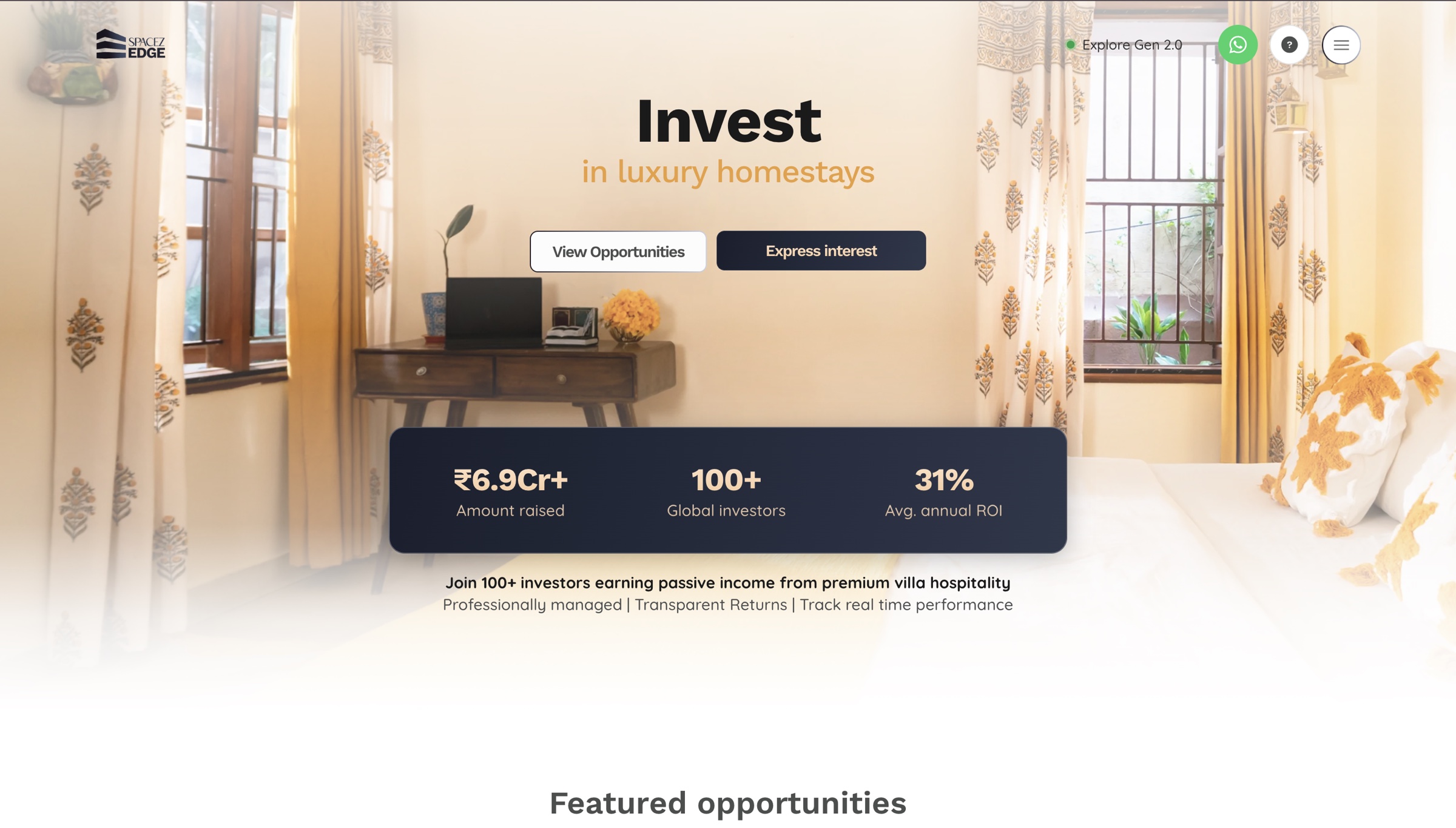
₹6.9Cr+
Raised on the platform
100+
Investors holding a share of a property
31%
Average annual return to investors
₹1.2Cr
Returned to investors so far
An investment dashboard is a trust product, and a figure that is only probably right is worse than no figure.
Overview
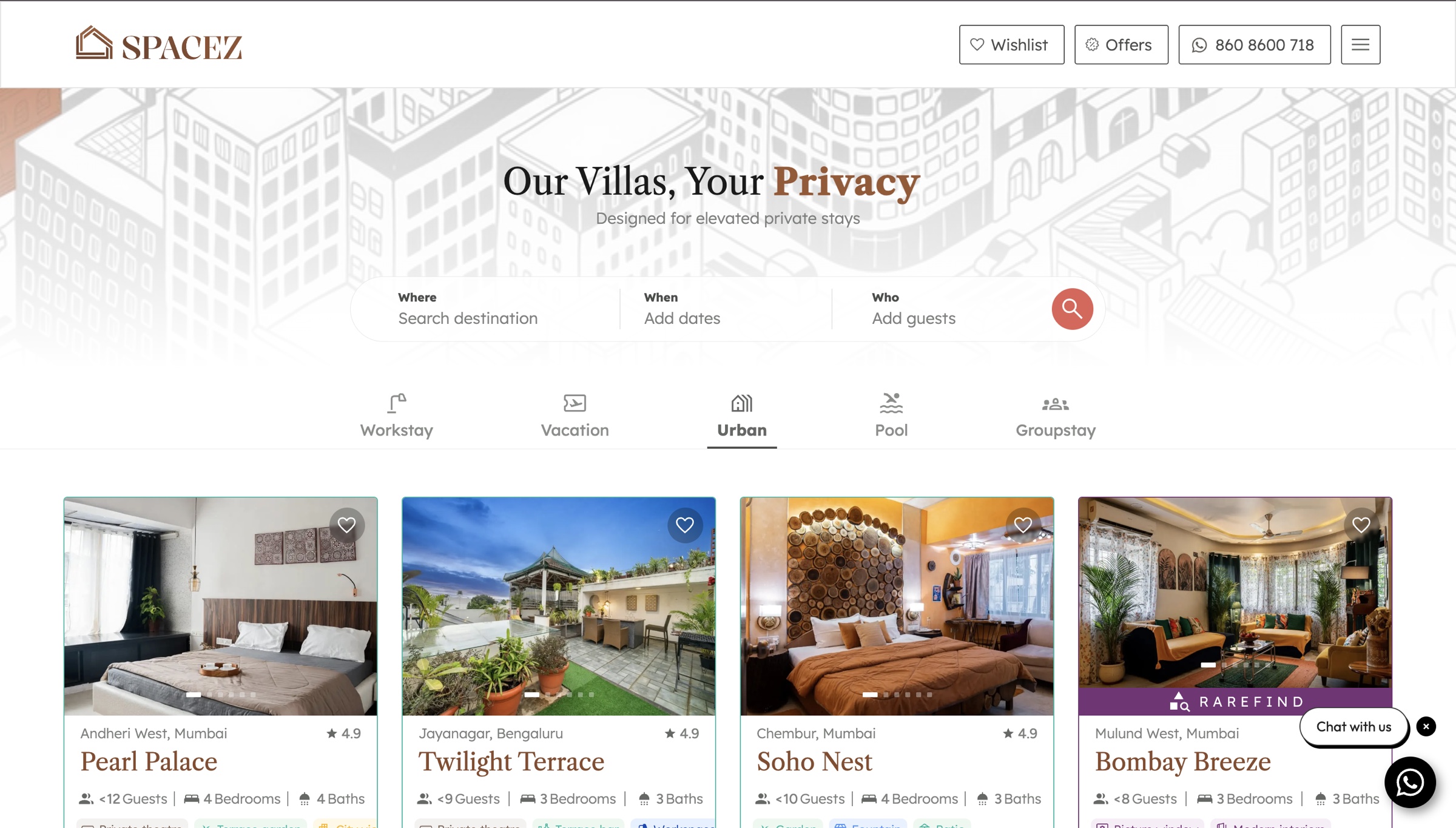
A managed homestay earns well and almost nobody can buy one. Spacez Edge sells a share of it instead: an investor puts in a fraction of the price and takes a fraction of what the property makes, without buying, furnishing or running anything. For Spacez it funds new properties from investor capital rather than from the balance sheet.
It has raised over ₹6.9 crore from 100+ investors and returned ₹1.2 crore to them.
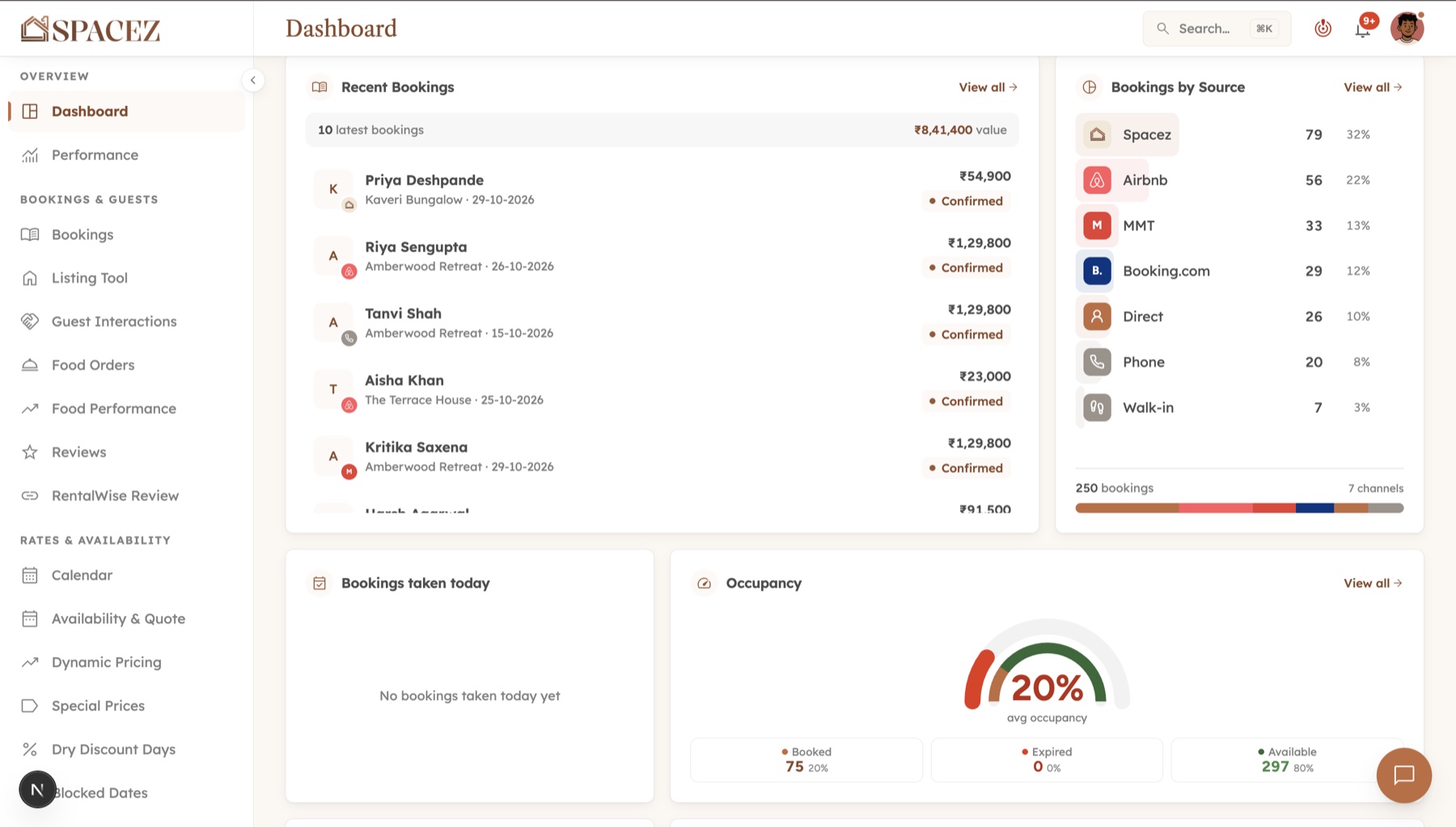
One person, fourteen months, 2,300 commits. Not one engineering ticket was raised for Edge. The wireframes, the interface, the data model, the parser and the investor portal are a single continuous piece of work, which is why the decisions below run from the schema all the way up to the screen.
Two things had to be true before anyone could open a dashboard: the platform had to know who an investor was, and what each property earned. Neither lived in one place. Investments were recorded under a parent’s name, against a family’s shared email, with a phone number belonging to whoever handled the paperwork.
An investment dashboard is a trust product. A figure that is only probably right is worse than no figure, because an investor cannot tell the difference and will act on it either way.
Outcome
Every investor now resolves to one profile, so a holding recorded three ways became one portfolio instead of three partial records.
Sixty-nine property-months across seven properties move through a single path, from the spreadsheet a property manager keeps to the figure an investor reads. Nothing reaches the database before a person has reviewed it, and no uploaded file can set what an investor is owed.
Investors self-serve on what they hold and what it earned, and can download the source spreadsheet behind every figure.
One investor, filed three ways
PAN and email look like identity keys. They are not: both belong to whoever filled in the onboarding form, and both change. Key on them and one person fragments into three records, each holding a part of what they own.
- Villa AFiled under the investor’s own name
- Villa BFiled under a parent’s name
- Villa CFiled against a shared family email
Three records, three part-portfolios, no view of the real position
- One investor profileAnchored on name and point of contact
- Three holdingsReturns and payouts under one portfolio
- One source of truthThe same record the team reconciles against
One position, visible to the investor and the team
The anchor became the investor’s name together with the point-of-contact number the investment team actually calls: the one pair that stays put while everything around it gets corrected. Relationship is stated rather than inferred, and emails attach to a profile rather than identify it.
The ledgers needed the opposite instinct. Every one received is transposed, so a deterministic parser reads that shape exactly and a model sits underneath it for the layout nobody has sent yet. Nothing is written until a person confirms the parse, and the split is always recomputed from the property’s configured share. A spreadsheet is a claim, not an instruction.
Reflection
The instinct is to start with the dashboard, because it is the part anyone can see. What made it trustworthy was settling who an investor is before deciding what to show them. An identity key is only ever as good as the form that collected it, and ours had been collecting the point of contact.